The New Albany Farmer’s Market is open for the 2011 season, so I thought I would re-post this Harvest Calendar so everyone could use this chart as a guide to local fruit and vegetable availability throughout the growing season. Early crops can vary by up to two weeks depending on spring weather. Late season harvests tend to vary little.

Indiana Fruits and Vegetable Harvest Calendar
| Fruits & Vegetables | April | May | June | July | Aug. | Sept. | Oct. | Nov. | ||||||||||||||||||||||||
| Apples | ||||||||||||||||||||||||||||||||
| Asparagus | ||||||||||||||||||||||||||||||||
| Beets | ||||||||||||||||||||||||||||||||
| Blackberries | ||||||||||||||||||||||||||||||||
| Blueberries | ||||||||||||||||||||||||||||||||
| Broccoli | ||||||||||||||||||||||||||||||||
| Brussel Sprouts | ||||||||||||||||||||||||||||||||
| Cabbage | ||||||||||||||||||||||||||||||||
| Cantaloupe | ||||||||||||||||||||||||||||||||
| Cauliflower | ||||||||||||||||||||||||||||||||
| Cherries | ||||||||||||||||||||||||||||||||
| Collards | ||||||||||||||||||||||||||||||||
| Eggplant | ||||||||||||||||||||||||||||||||
| Grapes | ||||||||||||||||||||||||||||||||
| Green Peas | ||||||||||||||||||||||||||||||||
| Hot Peppers | ||||||||||||||||||||||||||||||||
| Lettuce | ||||||||||||||||||||||||||||||||
| Lima Beans | ||||||||||||||||||||||||||||||||
| Mushrooms | ||||||||||||||||||||||||||||||||
| Onions (Dry) | ||||||||||||||||||||||||||||||||
| Peaches | ||||||||||||||||||||||||||||||||
| Plums | ||||||||||||||||||||||||||||||||
| Potatoes | ||||||||||||||||||||||||||||||||
| Pumpkins | ||||||||||||||||||||||||||||||||
| Radishes | ||||||||||||||||||||||||||||||||
| Raspberries | ||||||||||||||||||||||||||||||||
| Snap Beans | ||||||||||||||||||||||||||||||||
| Spinach | ||||||||||||||||||||||||||||||||
| Strawberries | ||||||||||||||||||||||||||||||||
| Summer Squash | ||||||||||||||||||||||||||||||||
| Sweet Corn | ||||||||||||||||||||||||||||||||
| Sweet Peppers | ||||||||||||||||||||||||||||||||
| Tomatoes | ||||||||||||||||||||||||||||||||
| Turnips/Turnip Greens | ||||||||||||||||||||||||||||||||
| Watermelon | ||||||||||||||||||||||||||||||||
| Winter Squash | ||||||||||||||||||||||||||||||||
| Local weather may affect harvest dates from one year to the next. | ||||||||||||||||||||||||||||||||
Data from the IN Dept. of Agriculture & Purdue University.
Tags: fruits, harvest calendar, vegetables
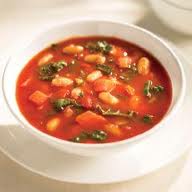
Italian Vegetarian Soup
I promised to post a delicious vegetarian soup made with Swiss chard (kale could be used), well here is what I came up with this weekend. I tried it out on Kenny and he seemed to like it, he loves any kind of soup and this was no exception. I thought it tasted very good too, but I am a winter soup kind of gal.
2 tbsp olive oil
2 cups chopped onion (1 large)
1 cup chopped carrots
3/4 cup chopped celery
5 cups vegetable broth ( 2 cans)
5 minced garlic cloves
4 cups diced tomatoes ( I use one quart of our home canned tomatoes)
1/4 cup chopped parsley
5 cups chopped swiss chard ( 1 good bunch from the farmer’s market)
3 cups white beans ( I like white cannellin beans)
1 cup cooked whole wheat pasta ( cooked al dente and drained, I used elbows)
1/4 cup basil (chiffonade – cut into ribbons)
salt and pepper to taste
Of course as I have mentioned before I always keep a bag of Mirepoix ( a French name for a combination of onion, celery and carrots) in the freezer as a quick soup starter. You can pick it up at any grocery store in the freezer section. I used an entire bag today to equal the above measurements.
Heat olive oil in a stockpot on medium heat, add onions, carrots and celery; saute until soft and golden, about 10 minutes. Add broth, garlic, tomatoes with juice and season with salt and pepper.
Bring to a boil, then reduce heat to low. Simmer for thirty minutes, uncovered. Stir in parsley and check for seasoning and adjust as necessary.
Add Swiss chard and beans, bring back to boil then reduce heat and simmer until chard is tender, about five minutes. Add cooked pasta to soup, stir in basil.
Ladle soup into bowls, sprinkle with Parmesan Cheese (optional), serve immediately and enjoy!
Tags: Basil, Garlic, Parmesan cheese, Soup, Swiss Chard, Tomatoes
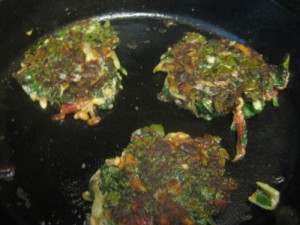
Swiss chard patties
Today at the New Albany Farmer’s Market we features Swiss Chard. I have been posting a few recipes on the web sight using Swiss chard and thought it would be a good idea to have a “feature” item this week. We brought lots of chard and enjoyed talking with customers on the nutritional values it provides and sharing recipes with them.
While Kenny was talking to one customer she shared with him that her mother was from Italy and her family ate chard almost everyday while growing up. She shared this recipe with him so we thought we would share it with you . Kenny wants me to fix it for him this weekend, I guess we’ll try it out.
2 cups cooked Swiss chard (chopped)
1/4 cup Parmesan cheese
1 cup bread crumbs
1 egg, slightly beaten
Salt and freshly ground pepper, to taste
1/4 cup Extra Virgin Olive Oil, or as needed
Squeeze all excess water from the chard; mix thoroughly with the crumbs, cheese, egg, salt, pepper. Shape into 3″ patties about 1/2″ thick; fry in hot olive oil until golden brown on both sides.
This recipe reminds me of one I already cook for Kenny and I posted last year, Feta Zucchini Cakes.
Tags: olive oil, Parmesan cheese, Swiss Chard
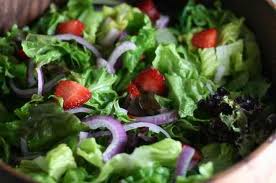
Val's Strawberry Salad
It’s “local” strawberry time here in Indiana and this is a wonderful seasonal salad. In fact it is so good you will even want to make it when local strawberries are gone. It’s prime time for fresh mixed greens and lettuces as well.
This is a beautiful salad to serve during the holiday season, I have a neighbor who always serves this at Christmas.
Salad
6 cups mixed greens/lettuces (spinach can be substituted)
1/2 pint strawberries sliced
sliced purple onions
1/4 cup Feta Cheese crumbles (optional)
Poppy Seed Dressing
3/4 cup sugar
1/2 small onion, diced
1 tsp salt
1 cup vegetable oil
1/3 cup vinegar
1 tbl spoon poppy seed
2 tsp dry mustard
Combine dry mustard, sugar, onion, salt, oil, vinegar and poppy seeds and mix well. (I use a blender or mixer to emulsify with one strawberry, this makes it pink and creamy).
Pour dressing over mixed greens, onions and strawberries. Sprinkle with Feta cheese and enjoy!
Tags: Lettuce, onions, poppy seeds, Strawberries
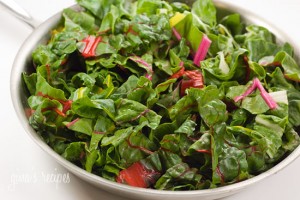
Sauté Swiss Chard ~ "Colored Lights"
Once you try this you will be making a stop at the New Albany Farmer’s Market weekly for your favorite new dish. This is so delicious, and such a quick and easy side dish to make, give it a try!
- 1 large bunch of fresh Swiss chard
- 1 small clove garlic, sliced
- 2 Tbsp olive oil
- 2 Tbsp water
- Pinch of dried crushed red pepper
- 1 teaspoon butter
- Salt
Rinse out the Swiss chard leaves thoroughly. Remove the toughest third of the stalk. Roughly chop the leaves into inch-wide strips.
Heat a saucepan on a medium heat setting; add olive oil, a few small slices of garlic and the crushed red pepper. Sauté for about a minute, add the chopped Swiss chard leaves. Cover. Check after about 5 minutes. If it looks dry, add a couple tablespoons of water. Flip the leaves over in the pan, so that what was on the bottom is now on the top. Cover again. Check for doneness after another 5 minutes (remove a piece and taste it). Add salt to taste, and a small amount of butter. Remove the Swiss chard to a serving dish.
Tags: Garlic, olive oil, Swiss Chard
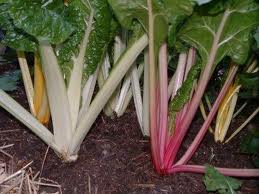
Kenny's Swiss Chard
If you’re unfamiliar with this humble green, you’re missing out! Swiss chard is amazingly healthy, packed with fiber, vitamins, minerals and important antioxidants like lutein. It is delicious, mild in taste and really inexpensive–usually only about $2 a bunch at the local market.
And of course, because of the “no net calories” rule (meaning you burn almost as much energy eating and digesting it as you take in by eating it in the first place), you can eat swiss chard until you’re green in the face and never gain weight.
So today my goal is to give you a few quick instructions on how to cook swiss chard and encourage you to cook it for your family. And in the next few days, I’ll also post a great vegetarian soup recipe that uses either swiss chard or kale, which is another high lutein green.
How to Cook Swiss Chard:
First rinse the leaves well in water. Then cut the last half-inch or so off from the ends of each stem. This is for aesthetic reasons only (you know, the way it looks), as the stems are usually a bit discolored at the very end.
Then, put 2-3 inches of water into the bottom of a 4 or 5 quart sauce pan, and put on the stove on high heat. You can chop up the rinsed leaves and stems while the water comes to a boil.
To chop everything most efficiently, I usually lay the full stack of leaves (with stems still attached) into one big pile on my cutting board and hack them crosswise into strips about one to two inches wide. You should be sure to slice up the stems. They’re good too, with the consistency of a celery stalk but a milder taste.
Then I’ll turn the knife 90 degrees and cut the greens once or twice lengthwise. In just a quick minute or two you’ve reduced an enormous pile of swiss chard into reasonable, bite-size pieces.
Another hint: always prep more swiss chard than you think you need. The greens will cook down quite a bit in the pan.
Then, once the water is boiling well, pack the chopped greens into the pan and cover with a lid. Reduce heat to medium and let the greens steam for 10-11 minutes. Swiss chard is one of the sturdier greens out there, so you’ll want to give it a few more minutes of cooking time than more tender greens like spinach which cook fully in just 4-5 minutes.
Then drain and serve! I encourage you to avoid adding butter or salt, but you can certainly add pressed garlic for an extra kick.
Tags: Garlic, Swiss Chard

Northern Quail
Kenny’s newest critters are Northern Quail, he decided to try his hand at raising them and selling their eggs. We have a few Vietnamese families that are our customers and they purchased quail eggs from a vendor at the market last year. That vendor stopped handling quail so that left our customers without an outlet for eggs, thus Kenny’s idea for raising quail. He enjoys caring for them and our customers are happy that they can now get fresh quail eggs whenever they desire them. Lucky for everyone the quail are happy and healthy and providing plenty of eggs. We will have them available at the New Albany Farmer’s Market this year. Here is some information about quail and their nutritional egg value.
Quail is a species of small game bird that belongs to the Phasianidae family, which includes the partridge, pheasant and common chicken. Although quail have always been hunted as a survival food, various 20th century French chefs made the birds popular as a culinary specialty. Eventually, quail eggs also become accepted as a gourmet delicacy in many cultures, as well as common street fare. Although the eggs are typically smaller than what you’re probably accustomed to seeing on your breakfast plate, quail-egg nutrition is similar to that of the chicken egg.
According to the U.S. Department of Agriculture, a serving of one quail egg weighing approximately 9 g provides nearly 1.2 g of protein but only 14 calories, with virtually no carbohydrates or sugars. One quail egg provides only 1 g of fat and 76 mg of cholesterol.
Quail eggs are just as versatile as chicken eggs and are used by nearly every culture in the world. The traditional way to serve quail eggs in French cooking is soft-boiled, along with potato “galettes,” which are sliced fingerling potatoes fried in oil until golden and seasoned with Parmesan cheese and black pepper. In Vietnam and Thailand, boiled quail eggs are available by the bag wherever beer is served. Quail eggs are prominent in Japanese cuisine as well. They are often hard-boiled and paired with fish, rice and steamed vegetables in a “bento,” the Japanese version of a boxed lunch available in railway stations and convenience stores. Quail eggs are also found in certain sushi dishes. Donna Hay, author of “Marie Claire Cooking,” offers a recipe for a salad that combines roasted Japanese pumpkin with marinated olives, feta cheese, oregano and soft-boiled quail eggs.

quail eggs
References
- “Feather Fancier”; The Japanese Quail a.k.a. Coturnix
- USDA: National Nutrient Database for Standard Reference
- “Journal of Food Composition and Analysis”; Comparison of the Cholesterol Content of Brazilian Chicken and Quail Eggs
Tags: Quail Eggs
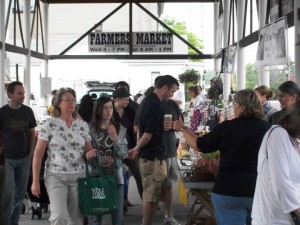
Opening day crowd!
Last Saturday was opening day at the New Albany Farmer’s Market and what a day it was! We has a very brief bout of misty rain, they the clouds rolled away and the sun shone bright. That is quit typical of the Lord’s blessings at the farmer’s market. In the four years we have been selling at the market I can count on both hands the number of times it has rained on us. We have been blessed by great weather and even better customers. Last week was no exception. Thanks to all our return customers, we were so glad to see each and everyone of you. We also want to welcome all of the new customers that stopped by this week, we look forward to your return visits.
Last week we had butter crunch lettuce, bok-choy, Chinese cabbage, kale, mustard greens, spinach, and mixed baby lettuces. We sold out of our baby lettuces and butter crunch by 10 am, this week we will bring plenty more so we don’t run out too soon. We also had our fresh farm eggs available. We will continue to have them all season.
We will again have lots of fresh greens, lettuces, herbs and plants for sale. This week we will have STRAWBERRIES! I have been eating a few here and there waiting for them to ripen, but yesterday we picked our first gallon and they are wonderful! I had a bowl last night and can’t wait to have another when I finish this post.
The market opens at 8am Saturday morning, come early for the best selections. We hope to see you at the market!
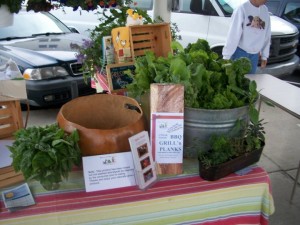
Opening day 10 am, and we are already sold out of lettuce!
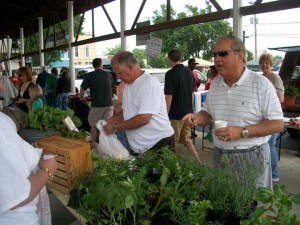
Mayor England stops by for a chat, while Mr King purchases eggs.

Uncle Sam's Victory Garden
You don’t have to wait until the last average frost date in your area to start a vegetable garden outdoors. As soon as the ground can be worked, onions, peas and spinach can be added to your garden. If you are going to grow your own onion seedlings, start them indoors approximately eight weeks before transplanting time. Onions sets, which are small onion bulbs, can also be purchased for planting. Peas should be directly seeded in your garden and do best with support from a trellis or other structure.
In early spring, approximately two weeks prior to the last average frost date in your area, it’s safe to plant lettuce, beets, carrots, radishes, dill, cilantro, cabbage, broccoli, celery, kale and potatoes outdoors. Both lettuce and celery seeds need light to germinate. Be careful to only cover these varieties of seeds lightly with soil during the planting process. Directly sow carrot, radish, dill and cilantro seeds. Transplanting is not recommended for these types of vegetables and herbs.
After the last average frost date, it is safe to plant beans, corn, melons, cucumbers, squash (summer and winter), tomatoes, peppers, pumpkins, eggplant and basil. Remember to check the predicted low temperatures in your local extended forecast before planting your frost susceptible plants outside. The local last average frost date is based on the average last predicted frost and is not an absolute date.
Directly sow beans and corn seeds. Pole beans need a trellis or other support since the plant is a climbing vine. Do not plant corn in one long row. Plant it in four short rows instead to ensure good pollination.
Do not directly sow peppers, tomatoes or eggplant. Start peppers indoor approximately eight weeks before transplanting them outdoors. Remove any buds that appear on your pepper seedlings before transplanting them to ensure that the root system has grown large enough to support a pepper crop. Start tomatoes indoors about six to seven weeks prior to moving them into your garden. Start eggplant in four-inch pots four to six weeks before the last average frost. Do not start eggplant in flats, since these plants are sensitive to transplant shock.
Squash can be started indoors to produce an earlier harvest. Winter squashes need three months of growing time to produce harvest-able results. Start winter squash indoors no more than three weeks before it is time to transplant your seedlings outdoors. Older seedlings do not transplant well.
Start cucumbers and melons indoors in cooler regions for a better yield, but transplant them gently because their roots do not like to be disturbed. Melons are heat loving plants. If you garden in a northern region, you may need to use plastic mulch or row covers to provide enough warmth to produce melons.
Follow these guidelines and you should have a successful vegetable garden season. Keep track of your results so that you can learn from your experiences and become a better gardener every year.
Valarie is an advanced master gardener and has loved plants most of her adult life. Kenny and his family have been farmers for many years and he has been gardening his entire life.
References;
Mother Earth News, The Almighty Onion, April-May 1998, p. 28.
Mother Earth News, All About Growing Peas, February-March 2009, p. 26.
The Vegetable Gardener’s Bible by Edward C. Smith, Storey Publishing 2000.
Egg Salad
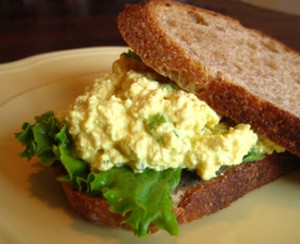
Egg salad sandwiches are some of the easiest sandwiches in the world to make, especially if you have some hard boiled eggs sitting around in the fridge (like around Easter). I’ve found the best combination for a great egg salad sandwich is using toasted rye bread, and including a bit of dill with the mayo, celery, green onions and egg of the egg salad. The amount of mayonnaise is really a matter of taste, it all depends on how mayo-y you want your sandwich. The dill comes from a suggestion from my sister Denise; ever since I learned this trick from her I add it every time. The dill just gives the egg salad a little unexpected lift.
There are so many variations you can use, just add a celery seed if you have no fresh celery. Use some stone ground mustard along with the mayo, delete the onion and add a teaspoon of lemon juice, it changes the entire taste. I really prefer Miracle Whip to mayo…but I’m not always the one eating it… Kenny likes the fresh celery and onions, for me this is my all time favorite easy recipe.
1 dozen eggs
4 tablespoons Miracle Whip (Mayo can also be used)
2 tablespoons zucchini relish (pickle relish can also be used)
½ teaspoon celery seed (fresh diced celery can also be used)
½ teaspoon dill weed (I use one tablespoon fresh dill when available)
Salt and pepper to taste
Bring eggs to a boil, cover the pot and turn off the burner. Let the eggs sit for 20 minutes, shell and rinse. Then cut of the eggs (kinda chunky) add remaining ingredients. I usually like to refrigerate for an hour or so before serving.
Tags: dill, Eggs, zucchini relish